
Confused about how to face that final government job interview round? Don’t worry, we’re here to guide you step-by-step! You’ve already crossed the toughest hurdle by clearing the written exam – now it’s time to showcase your personality and grab that dream sarkari job.
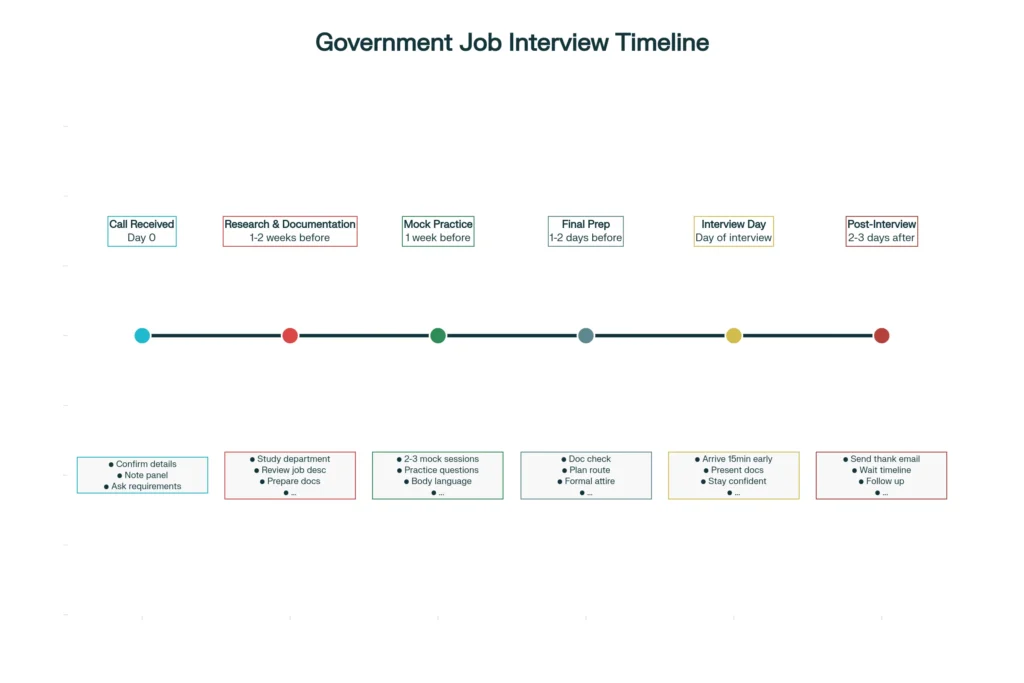
Understanding Government Job Interviews
Government job interviews aren’t your typical private company chit-chats – they’re structured, formal, and merit-based assessments that evaluate your personality, knowledge, and suitability for public service. Unlike private sector interviews, these panels follow strict guidelines and assess candidates on specific competencies mentioned in the job description.
The interview typically carries significant weightage in your final selection – sometimes up to 100-200 marks out of your total score. This means even if you’ve scored well in the written exam, a poor interview performance can cost you the job. But here’s the good news – with proper preparation, you can easily ace this round!
Government interviews focus on three main areas: your personality and attitude, current affairs and general knowledge, and your understanding of the role and department you’re applying to. The panel wants to see if you have the right mindset for public service, not just bookish knowledge.
Essential Pre-Interview Preparation
Research is Your Foundation
Before walking into that interview room, you need to become an expert about your target department. Study the organization’s structure, recent initiatives, key personnel, and current challenges. If you’re applying for SBI, visit their website regularly; if it’s UPSC, understand the various services and their roles.
Don’t just memorize facts – understand the bigger picture. What recent policies has your department implemented? What are the current challenges in that sector? This knowledge will help you answer questions confidently and show genuine interest.
Document Preparation Checklist
Government jobs require extensive documentation, and missing even one can disqualify you. Here’s your complete checklist:
Mandatory Documents for All Candidates:
- Original matriculation certificate (for age and name proof)
- All educational certificates and marksheets
- Caste certificate (if applicable) from competent authority
- Income certificate for EWS category
- Disability certificate (if applicable)
- Recent passport-size photographs
- Government-issued photo ID (Aadhar, PAN, Passport)
- Printout of admit card
Additional Requirements:
- Ex-servicemen: Discharge certificate and pension payment order
- Sports quota: Valid sports certificate
- Domicile certificate (if required)
- Self-attested photocopies of all originals
Pro tip: Carry extra photocopies and organize all documents in a proper file. A well-organized candidate creates a positive first impression!
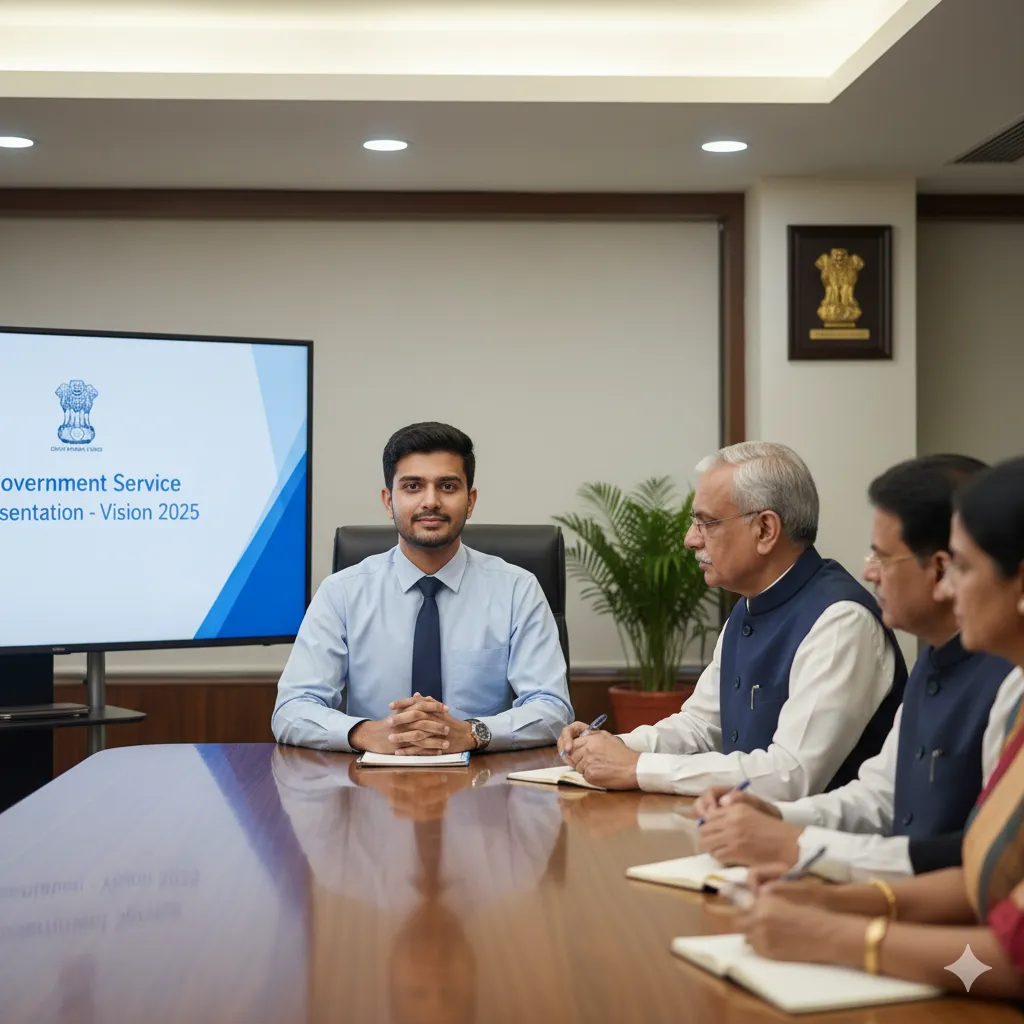
Essential Do’s During Government Job Interviews
Master the Art of First Impressions
Your interview begins the moment you enter the office premises, not when you sit before the panel. Greet everyone politely – from the security guard to the receptionist. You never know whose opinion might influence the final decision.
Walk confidently with good posture, keeping your shoulders back and head high. When entering the interview room, wait to be asked to sit down, and offer a firm (not crushing) handshake while making eye contact.
Communication Excellence
Speak clearly and at a moderate pace that’s audible but not disturbing. Use formal English and avoid informal words like “ya,” “yep,” or excessive slang. When you don’t know an answer, be honest rather than trying to bluff – the panel appreciates honesty over fake confidence.
Structure your answers using the STAR technique (Situation, Task, Action, Result) especially for behavioral questions. This gives your responses a logical flow and demonstrates your problem-solving abilities.
Body Language Mastery
Maintain good eye contact throughout the conversation – about 2-4 seconds at a time. This builds rapport and shows confidence. Sit upright with your back straight, avoiding slouching or leaning excessively.
Use open palm gestures when speaking, as they suggest honesty and engagement. Nod occasionally when the interviewer is speaking to show you’re actively listening. Keep your hands visible and avoid crossing your arms, which can appear defensive.
Current Affairs and Knowledge Demonstration
Read newspapers thoroughly for 1-2 hours daily, focusing on national and international developments. Government websites like PIB, Vikaspedia, and Arthpedia are excellent sources for authentic information.
Don’t just memorize facts – develop balanced opinions on current issues. When asked about controversial topics, present multiple perspectives before sharing your well-reasoned viewpoint.
Critical Don’ts to Avoid
Timing and Punctuality Mistakes
Never be late for a government interview – plan to arrive 15 minutes early. If you’re running late due to unforeseen circumstances, call immediately to inform. Being late creates the worst first impression and suggests poor time management skills.
Don’t rush into the interview room or appear stressed. Take a moment to compose yourself before entering.
Communication Pitfalls
Avoid dominating the conversation or interrupting the interviewer. Government panels follow a structured format, and interrupting shows poor etiquette. Similarly, don’t give only yes/no answers – elaborate appropriately but don’t ramble unnecessarily.
Never argue with the panel members or become defensive about your answers. There’s a fine line between defending your viewpoint and being argumentative.
Attitude and Behavior Mistakes
Don’t display overconfidence or arrogance – confidence is good, but arrogance is a major red flag. Avoid making jokes or being overly casual, as government interviews are formal proceedings.
Never badmouth your current or previous employers, colleagues, or educational institutions. This reflects poorly on your character and professionalism.
Dress Code and Appearance Errors
Avoid flashy, casual, or inappropriate clothing. Men should wear simple formal shirts with trousers, while women can opt for saree, salwar-kameez, or formal Western wear. Keep grooming neat and minimal – avoid strong perfumes or excessive makeup.
Don’t chew gum, bring food/drinks, or use your mobile phone during the interview. These actions show lack of respect for the process.
Check For More Guidance:- All Sarkari Job, Sarkari Exams and Yojana Related Guidance
Common Interview Questions & How to Answer
Personal Background Questions
Government interviews typically start with personal questions to make you comfortable and understand your background. Common questions include:
“Tell me about yourself” – Prepare a 1-2 minute structured response covering your education, relevant experience, and motivation for government service.
“Why do you want to join government service?” – Focus on your desire to serve the nation and contribute to public welfare, not just job security.
“What are your strengths and weaknesses?” – Be honest about weaknesses but show how you’re working to improve them.
Current Affairs and Opinion-Based Questions
Panels often ask about recent developments to test your awareness and analytical thinking. For example:
“What’s your opinion on the latest budget?” – Present a balanced view covering both positive aspects and areas of concern, backed by facts.
“How would you handle a situation with communal tensions?” – Demonstrate your problem-solving approach and commitment to constitutional values.
Situational and Ethical Dilemmas
Government jobs require strong ethical standards, so expect questions testing your moral compass. For instance:
“What would you do if your senior asks you to do something unethical?” – Emphasize your commitment to rules and constitutional values while showing respect for hierarchy.
Body Language & Presentation Tips
Power Posture Techniques
Before entering the interview room, practice the “power pose” for 30 seconds – stand like Superman or Wonder Woman to boost your confidence. This isn’t just posturing; it actually signals calm confidence to your nervous system.
Handshake Strategy
Perfect your handshake by practicing the “mirror grip” technique – subtly match the interviewer’s grip pressure. This builds instant rapport and shows mutual respect. Avoid both the “wet fish” (too weak) and the “bone crusher” (too strong) handshakes.
Eye Contact Guidelines
Follow the 7-second rule for first impressions – greet with a genuine Duchenne smile (one that crinkles your eyes) as this conveys approachability and emotional intelligence. During the conversation, maintain steady eye contact but don’t stare intensely.
Post-Interview Follow-up
When and How to Follow Up
Government job processes are typically slower than private sector roles. If the panel mentioned a timeline, wait until that period passes before following up. Generally, wait 2-3 business days before sending a polite follow-up email.
Government hiring involves multiple stages including background verification, medical examination, and administrative processing. Don’t interpret delays as rejection – patience is key in government recruitment.
Follow-up Email Template
Subject: Follow-up regarding [Position Name] interview on [Date]
“Dear [Interviewer Name],
Thank you for taking the time to interview me for the [position] role. I enjoyed our conversation about [specific topic discussed] and remain very interested in this opportunity.
I would appreciate any updates on the selection timeline. Please let me know if you need any additional information from me.
Thank you for your consideration.
Regards,
[Your Name]”
Keep it professional, concise, and avoid appearing pushy or impatient.
FAQs
Q1: How long should I prepare for a government job interview?
Start preparing immediately after clearing the written exam – don’t wait for results. Ideally, give yourself 2-3 weeks for comprehensive preparation covering all aspects.
Q2: Should I join coaching for interview preparation?
While not mandatory, specialized interview coaching can be helpful, especially for first-time government job aspirants. However, don’t over-depend on coaching – personal preparation is equally important.
Q3: Can I ask about salary during the interview?
Generally avoid discussing salary during government interviews unless specifically asked. Government pay scales are usually predetermined and non-negotiable. Focus on the role and your contribution instead.
Q4: How important are current affairs in government interviews?
Extremely important! Current affairs can comprise 30-40% of your interview questions. Read newspapers daily and stay updated on government policies and recent developments.
Q5: What if I don’t know the answer to a question?
Be honest and say you don’t know rather than attempting to bluff. You can ask for clarification or request a moment to think. Honesty is valued more than fake knowledge.
Q6: How should I dress for a government interview?
Dress formally and conservatively. Men should wear simple shirts with formal trousers, women can choose sarees, salwar-kameez, or formal Western wear. Avoid flashy colors or accessories.
Q7: Can I carry notes or reference material?
Generally, no. However, you should carry all required documents in original plus self-attested photocopies. Some interviews may allow you to refer to your own certificates if needed.
Q8: How long do government interviews typically last?
Most government interviews last 15-30 minutes, though UPSC interviews can go up to 45 minutes. The duration often depends on how the conversation flows.
Q9: Should I mention my backup plans or other job applications?
Avoid mentioning other job applications or backup plans. Show genuine interest in the specific role you’re interviewing for.
Q10: What if the panel asks uncomfortable or personal questions?
Politely redirect personal questions to professional aspects. If questions seem inappropriate, answer diplomatically while maintaining your composure.
Conclusion
Cracking a government job interview is all about preparation, confidence, and the right attitude. Remember, you’ve already proven your academic abilities by clearing the written exam – now it’s time to show your personality and passion for public service.
Focus on being authentic rather than trying to give “perfect” answers. The panel wants to see the real you and assess if you’re genuinely committed to serving the nation. With proper preparation, practice, and the right mindset, you can definitely clear this final hurdle.
Remember, success in government exams is about consistency and perseverance. Even if you don’t clear this interview, treat it as a learning experience for your next attempt. Your hard work will definitely pay off – keep preparing, stay motivated, and success will be yours!
Also Read: How to Prepare for Written Exams After 12th | Top Government Job Opportunities in 2025 | Complete Guide to Government Job Application Process
Disclaimer: Always cross-check the latest updates and requirements on the official website of the respective organization before appearing for any interview.